Dometic 3 Button Thermostat: A Comprehensive Guide
This guide details the operation and troubleshooting of the Dometic 3313192 series thermostat, offering insights from official manuals and service documentation available as of February 27, 2026.
The Dometic 3-button thermostat, specifically the 3313192 series, represents a user-friendly climate control solution commonly found in recreational vehicles and similar applications. This thermostat offers essential heating and cooling functions through a simplified interface. Understanding its features and operation, as detailed in the official Dometic manuals available on platforms like ManualsLib, is crucial for optimal performance.
This guide aims to provide a comprehensive overview, drawing from service documentation and operating instructions dated as recently as February 27, 2026. It will cover everything from initial setup and control panel functions to advanced settings and troubleshooting common issues, ensuring users can effectively manage their comfort levels.
Understanding the Thermostat’s Purpose
The primary function of the Dometic 3-button thermostat (3313192 series) is to regulate the temperature within an enclosed space, typically an RV or camper. It achieves this by controlling a heating and/or cooling system, responding to user-defined setpoints. As outlined in the Dometic operating instructions, found on resources like ManualsLib and detailed in service manuals from Dometic Corporation in Elkhart, IN, the thermostat acts as the central command for climate control.
Its purpose extends beyond simple temperature adjustment; it optimizes comfort and energy efficiency. The thermostat’s design prioritizes ease of use, offering straightforward control over system operation, as evidenced by its limited button configuration. Understanding this core purpose is key to maximizing its benefits.

Key Features and Specifications
This thermostat boasts simple 3-button operation, mode selection, temperature adjustment, and fan control, detailed in Dometic’s manuals and service documentation.
Core Functionality Overview
The Dometic 3-button thermostat provides essential climate control for RVs and similar applications. Its core function revolves around managing heating and cooling systems via a streamlined interface. Users can easily power the unit on or off, select between cooling, heating, or automatic modes, and adjust the desired temperature.
The thermostat’s design prioritizes simplicity, making it accessible for users without extensive technical knowledge. It displays the current inside temperature, allowing for informed adjustments. Furthermore, it offers fan speed control options, enhancing comfort levels. Detailed instructions regarding system configuration and initialization are available in the official Dometic manuals, ensuring proper setup and optimal performance. This overview highlights the fundamental capabilities of the thermostat, as documented in available resources.
Model Numbers and Compatibility (3313192 Series)
The Dometic 3-button thermostat is primarily identified by the model number 3313192 and its associated series. This series is designed for compatibility with a range of Dometic Duo-Therm Comfort Control Center systems commonly found in recreational vehicles. Ensuring compatibility is crucial for proper operation; therefore, referencing the system’s documentation alongside the thermostat manual is recommended.
While broadly compatible with Dometic systems, specific configurations and older models may require verification. The diagnostic service manual details zone configurations and potential compatibility issues. Users should consult ManualsLib and Dometic’s official resources to confirm suitability for their specific RV or application. Proper model identification guarantees optimal performance and avoids potential system conflicts.
Power Requirements and Installation Considerations
The Dometic 3-button thermostat typically operates on low-voltage DC power, commonly 12V or 24V, supplied by the RV’s existing climate control system. Installation generally involves connecting to the existing wiring harness, ensuring correct polarity to avoid damage. It’s vital to disconnect power before any wiring is attempted.
Proper mounting location is also key, avoiding direct sunlight or proximity to heat sources for accurate temperature readings. The manual emphasizes careful wire routing and secure connections. Incorrect installation can lead to malfunction or system failure. Referencing the diagnostic service manual can aid in troubleshooting power-related issues. Always consult a qualified technician if unsure about any aspect of the installation process;

Getting Started: Initial Setup
Initial setup involves system configuration and initialization, as outlined in the Dometic manual, alongside verifying factory preset settings for optimal performance and user preference.
System Configuration and Initialization
The Dometic 3313192 series thermostat requires careful system configuration upon initial power-up. This process, detailed in the operating instructions manual available on ManualsLib, ensures proper communication between the thermostat and the connected heating/cooling unit. Initialization typically involves a self-test sequence, verifying sensor functionality and control board operation;
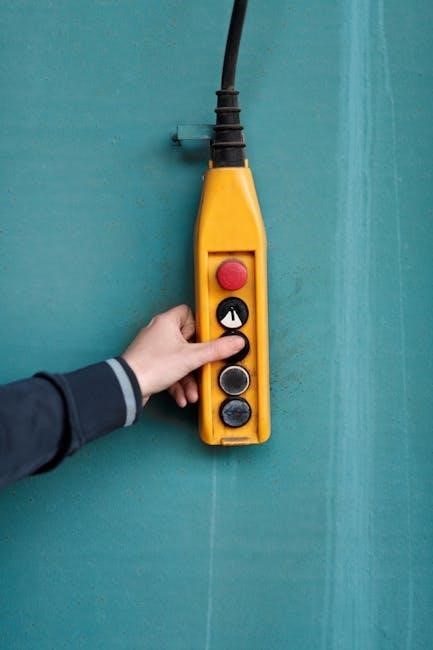
Users should consult the manual for specific wiring diagrams and compatibility checks, particularly when replacing an existing thermostat. Correct wiring is crucial for preventing damage and ensuring accurate temperature control. The manual emphasizes the importance of verifying power supply voltage before proceeding. Following these steps guarantees a smooth and reliable start-up, maximizing the thermostat’s performance and longevity.
Factory Preset Settings Explained
Upon initial operation, the Dometic 3313192 thermostat arrives with pre-configured settings designed for broad compatibility. According to the operating instructions manual found on ManualsLib, the default temperature format is typically Fahrenheit (ºF), though this is easily adjustable. The fan is often initially set to ‘Auto’ mode, cycling on and off with heating or cooling demands.
The initial temperature set-points are moderate, aiming for comfortable conditions in most environments. These presets serve as a starting point, allowing users to customize the thermostat to their specific preferences and climate. Understanding these factory defaults simplifies the initial setup process, providing a functional system right out of the box before personalized adjustments are made.
Temperature Format Selection (ºF / ºC)
The Dometic 3313192 series thermostat allows users to display temperatures in either Fahrenheit (ºF) or Celsius (ºC), catering to regional preferences. The operating instructions manual details a specific procedure, typically involving a combination of button presses. While the exact sequence isn’t explicitly stated in the provided snippets, it’s accessible within the full manual available for download on ManualsLib.
This customization ensures readability and understanding for all users, regardless of their familiarity with either temperature scale. Changing the format doesn’t affect the thermostat’s functionality; it merely alters the displayed values. This feature enhances user experience and provides flexibility, making the thermostat adaptable to diverse environments and individual needs.

Control Panel Breakdown
The Dometic thermostat features three control buttons, each with dedicated functions for power, mode selection, and temperature adjustments, as outlined in the operating instructions.
Quick Reference to Control Buttons
Understanding the three buttons is crucial for operating your Dometic thermostat effectively. This quick reference provides a concise overview of each button’s primary function, as detailed in the official Dometic 3313192 series operating instructions manual. Button one typically controls the power, allowing you to turn the system on or off. Button two is dedicated to mode selection, enabling you to choose between cooling, heating, or automatic operation. Finally, button three manages temperature adjustments, letting you increase or decrease the desired temperature setting.
Refer to the full manual for detailed explanations and advanced features associated with each control.
Button 1: Power/On-Off Functionality
The first button on your Dometic 3-button thermostat serves as the primary power control. Pressing this button initiates the system startup sequence, activating the cooling or heating functions based on the currently selected mode. A subsequent press of the same button will completely shut down the system, returning it to an off state. This ensures full system shutdown, conserving energy when climate control isn’t needed.
The manual emphasizes that this button doesn’t just cycle the fan; it controls the entire system’s power. Confirm the system is fully off before performing maintenance or troubleshooting.
Button 2: Mode Selection
The second button on the Dometic thermostat is dedicated to cycling through the available operating modes. Each press of this button advances the system to the next mode in the sequence: Off, Cool, Heat, and Auto. The currently selected mode is typically indicated by an internal system display, though specifics depend on the model. Understanding these modes is crucial for optimal climate control.
The manual highlights the importance of selecting the correct mode for your needs. Auto mode intelligently switches between heating and cooling to maintain a set temperature, while Cool and Heat modes lock the system into a specific function.
Button 3: Temperature Adjustment
The third button on the Dometic 3-button thermostat controls the desired temperature set-point. Pressing this button allows you to incrementally increase or decrease the target temperature. The direction of adjustment (up or down) is often indicated by on-screen symbols, though this can vary between specific models within the 3313192 series.
The manual emphasizes that adjustments are made in one-degree increments, providing precise control over your comfort. Careful temperature set-point adjustment is key to efficient operation and energy conservation. Remember to allow sufficient time for the system to respond to changes.

Operating Modes Explained
The Dometic thermostat offers Off, Cool, Heat, and Auto modes, each controlling the system’s operation for optimal comfort and energy efficiency, as detailed in the manual.
Off Mode: Complete System Shutdown
Selecting Off mode on the Dometic 3-button thermostat completely disables the heating and cooling systems. This ensures no energy is consumed by either component, providing a true system shutdown. The fan will also cease operation in this mode, eliminating airflow.
According to the operating instructions manual, this is the preferred setting when the climate control system is not needed, such as during extended periods of vacancy or when natural ventilation is sufficient. It’s a simple, effective way to conserve energy and reduce operational costs. The thermostat will maintain the ‘Off’ setting until another mode is actively selected using the mode selection button. Remember to verify the system is truly off by checking for any residual operation.
Cool Mode: Activating the Cooling System
Engaging Cool mode on the Dometic 3-button thermostat initiates the air conditioning system, providing cooling as needed. The unit will activate the compressor to lower the temperature to the set-point established by the user. Fan operation is also enabled, circulating cooled air throughout the designated space.
The manual details that the cooling system will cycle on and off to maintain the desired temperature. Adjusting the temperature set-point allows for precise control over the cooling intensity. Ensure proper airflow around the thermostat for accurate temperature sensing. Selecting Cool mode is straightforward using the mode selection button, as outlined in the Dometic operating instructions.
Heat Mode: Activating the Heating System
Selecting Heat mode on your Dometic 3-button thermostat activates the heating system, providing warmth when temperatures drop. This initiates the heating element or furnace, depending on your RV’s configuration, to raise the ambient temperature to the user-defined set-point. The fan will also engage, distributing heated air throughout the interior.
The Dometic manual emphasizes that the heating system operates cyclically, turning on and off to maintain the selected temperature. Adjusting the temperature set-point allows for customized heating levels. Proper ventilation is crucial when using Heat mode. Refer to the operating instructions for specific details regarding your model and ensure safe operation.
Auto Mode: Automatic Switching Between Heating and Cooling
Dometic’s Auto mode offers convenient climate control by automatically switching between heating and cooling to maintain your desired temperature. This mode intelligently monitors the inside temperature and activates either the heating or cooling system as needed, eliminating manual adjustments. The thermostat compares the current temperature to your set-point and selects the appropriate function.
The manual highlights that Auto mode is ideal for fluctuating weather conditions. It’s crucial to set a comfortable temperature set-point; the system will then manage both heating and cooling to achieve it. Ensure proper airflow around the thermostat for accurate readings and optimal performance in Auto mode.

Advanced Operations & Settings
Explore fine-tuning your Dometic thermostat, including fan speed adjustments, precise temperature set-point control, and understanding the accuracy of the inside temperature display.
Fan Speed Control
The Dometic 3-button thermostat offers limited, but crucial, fan speed control options. While not explicitly detailed with multiple speed settings like some advanced systems, the fan operation is intrinsically linked to the selected operating mode – Cool, Heat, or Auto. In Cool mode, the fan typically operates continuously to circulate cooled air throughout the space. Similarly, in Heat mode, the fan activates when the heating system is engaged, distributing warm air.
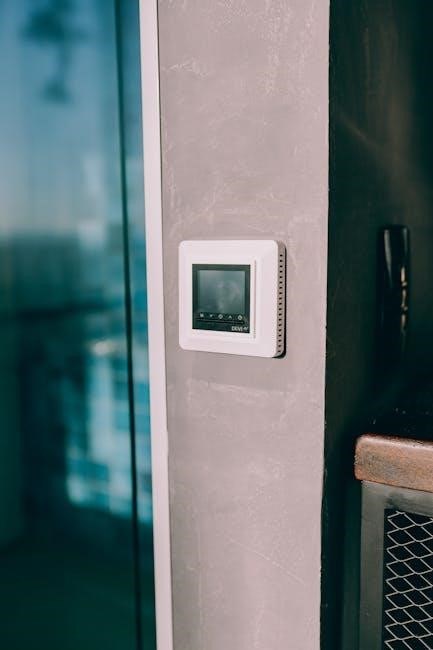
Auto mode intelligently manages fan operation, cycling it on and off as needed to maintain the desired temperature. The manual doesn’t specify distinct fan speed adjustments beyond this operational logic. Users primarily influence fan activity by selecting the appropriate mode and setting a comfortable temperature. Understanding this mode-dependent functionality is key to optimizing airflow and comfort within your RV or vehicle.
Temperature Set-Point Adjustment
Adjusting the temperature set-point on the Dometic 3-button thermostat is fundamental to achieving desired comfort levels. Utilizing Button 3, users can incrementally increase or decrease the target temperature. The thermostat displays the currently set temperature, allowing for precise adjustments. The responsiveness of the system to these changes depends on the selected operating mode – Cool, Heat, or Auto – and the existing ambient temperature.
It’s important to note that the thermostat’s accuracy, as with any system, can be subject to minor variations. Consistent monitoring of the displayed temperature and personal comfort levels is recommended. The manual doesn’t detail specific calibration procedures, emphasizing user adjustment within the available range to optimize the climate control experience.
Inside Temperature Display and Accuracy
The Dometic 3-button thermostat prominently displays the currently measured inside temperature, providing users with real-time environmental information. This reading is crucial for understanding the system’s performance and making informed adjustments to the temperature set-point. However, the manual doesn’t specify a precise accuracy rating for the temperature sensor.
Factors like thermostat placement – avoiding direct sunlight or drafts – can influence the accuracy of the displayed temperature. While the system aims for reliable readings, minor discrepancies are possible. Users should consider these potential variations when evaluating comfort levels and adjusting settings. Consistent observation and comparison with a separate thermometer can help gauge the system’s accuracy in a specific installation.

Troubleshooting Common Issues
Addressing problems like unresponsive thermostats, incorrect temperature readings, or mode-switching failures is vital for optimal performance, referencing the diagnostic service manual.
Thermostat Not Responding
If the Dometic 3-button thermostat fails to respond, begin by verifying the power supply to the unit. Ensure the system’s circuit breaker hasn’t tripped and that all wiring connections are secure, both at the thermostat and the control board. A thorough check of the wiring harness is crucial, looking for any loose connections or damaged wires.
Consult the diagnostic service manual for specific voltage requirements and testing procedures. Sometimes, a simple reset can resolve the issue; try briefly disconnecting the power to the thermostat. If the problem persists, it may indicate a faulty thermostat or a deeper issue within the Duo-Therm Comfort Control Center system, necessitating professional service. Refer to Dometic’s service contact information for assistance.
Incorrect Temperature Readings
When the Dometic thermostat displays inaccurate temperatures, several factors could be at play. First, confirm the correct temperature format (ºF or ºC) is selected within the system configuration. Ensure the thermostat isn’t directly exposed to sunlight or other heat sources, as this can skew readings. Check for obstructions blocking airflow around the unit, impacting its ability to sense ambient temperature accurately.
The internal temperature sensor might be faulty, requiring professional diagnosis. Compare the thermostat’s reading with a calibrated thermometer. If a significant discrepancy exists, contact Dometic’s service office for support and potential replacement options. Refer to the diagnostic service manual for sensor testing procedures.
System Not Switching Modes
If your Dometic thermostat fails to transition between Off, Cool, Heat, or Auto modes, begin by verifying the correct mode is selected using Button 2. Confirm the set temperature is appropriately adjusted for the desired mode – for example, a higher temperature for heating and a lower one for cooling. Inspect the power supply to ensure consistent operation.
A potential issue could be a faulty control board within the Duo-Therm Comfort Control Center system. Consult the diagnostic service manual for troubleshooting steps related to mode control. If problems persist, contact Dometic’s USA service office in Elkhart, IN, for expert assistance and potential repair or replacement guidance.

Service and Support Information
For assistance with your Dometic thermostat, contact the USA service office in Elkhart, IN, or access diagnostic manuals and resources on ManualsLib.
USA Service Office Contact Details (Dometic Corporation, Elkhart, IN)
Dometic Corporation provides dedicated support for its thermostat products, including the 3313192 series. For direct assistance with any issues, questions, or warranty claims related to your Dometic 3-button thermostat, you can reach their USA service office located at 1120 North Main Street, Elkhart, Indiana, 46514.
While specific contact methods (phone number, email) aren’t explicitly detailed in the readily available documentation, referencing your product’s documentation or visiting the official Dometic website is recommended to obtain the most current contact information. Dometic strives to provide prompt and effective support to ensure customer satisfaction with their climate control solutions. Remember to have your model number handy when contacting support for faster service.
Diagnostic Service Manual Resources (Duo-Therm Comfort Control Center Systems)
For qualified technicians, detailed diagnostic information is available pertaining to the underlying Duo-Therm Comfort Control Center Systems utilized within the Dometic 3-button thermostat. These resources, though technical in nature, can aid in pinpointing complex issues beyond basic troubleshooting.
Specifically, service manuals address scenarios like zone configuration problems (as noted in available documentation fragments). Access to these manuals typically requires professional credentials. While not intended for end-user repair, understanding their existence highlights the depth of diagnostic capabilities available. Referencing these resources can assist in identifying component failures or system misconfigurations impacting thermostat performance, ensuring accurate and efficient repairs by trained personnel.
Manual Download Locations (ManualsLib)
Users seeking comprehensive documentation can readily access the Dometic 3313192 series operating instructions manual on ManualsLib. This online repository provides a convenient, freely available resource for understanding all aspects of thermostat operation. The manual, dated 2014-07-09 (according to available metadata), covers essential topics.
These include system configuration, initialization procedures, factory preset settings, and a quick reference guide to control buttons. Furthermore, detailed sections explain programming, on/off functionality, temperature format selection (ºF/ºC), and interpreting the inside temperature display. ManualsLib offers a searchable PDF download, ensuring easy access to the information needed for optimal thermostat use and troubleshooting.