Muay Thai, the “art of eight limbs,” offers a comprehensive workout, blending cardio, strength, and technique.
Numerous PDF guides detail routines,
from beginner drills to advanced conditioning,
accessible globally – Bangkok to Brazil!
What is Muay Thai?
Muay Thai, literally “Thai boxing,” is Thailand’s national sport and a combat sport rooted in ancient martial arts. It distinguishes itself through the combined use of fists, elbows, knees, and shins – hence the “art of eight limbs.” Historically, it evolved from military self-defense techniques dating back to the 13th century.
Today, Muay Thai transcends its combative origins, becoming a globally practiced fitness discipline. Many PDF workout routines focus on building strength, endurance, and technique. It’s a staple in Mixed Martial Arts (MMA) training, valued for its effectiveness and intensity, and increasingly recognized for personal growth.
The History and Evolution of Muay Thai
Muay Thai’s origins trace back to the 15th century, evolving from ancient battlefield techniques used by Thai soldiers. Early matches were often brutal, lacking modern rules and safety measures. Over centuries, the art developed, incorporating rituals and traditions, becoming deeply ingrained in Thai culture.
The late 20th and 21st centuries witnessed Muay Thai’s international expansion, driven by Thai practitioners competing globally in kickboxing and mixed-rules matches. This led to the creation of numerous PDF workout guides, adapting traditional techniques for fitness and competition, making it accessible worldwide.
Benefits of a Muay Thai Workout
Muay Thai provides a full-body workout, engaging legs, core, and upper body through striking and clinching. It dramatically improves cardiovascular health, muscular endurance, and overall strength. Beyond physical gains, Muay Thai cultivates discipline, focus, and mental fortitude.
Many PDF workout routines emphasize these benefits, offering structured training plans for all levels. These resources highlight Muay Thai’s effectiveness in MMA training and personal development, promoting not just fitness, but a holistic approach to well-being, accessible through detailed guides.

Warm-up Routine for Muay Thai
Muay Thai warm-ups, often detailed in PDF guides, prioritize dynamic stretching, cardio, and joint mobility. Preparing the body is crucial for injury prevention!
Dynamic Stretching
Dynamic stretching is a cornerstone of a proper Muay Thai warm-up, frequently outlined in detailed PDF workout routines. Unlike static stretches, dynamic movements prepare muscles for explosive action. Examples include arm circles, leg swings (forward, backward, and sideways), torso twists, and high knees.
These movements increase blood flow, improve range of motion, and activate the nervous system. A well-executed dynamic stretching sequence, often lasting 10-15 minutes, significantly reduces the risk of injury during intense training. Many PDF guides emphasize mimicking fight movements during the warm-up to further prepare the body.
Cardio Warm-up
A crucial component of any Muay Thai workout, as detailed in many PDF training plans, is a dedicated cardio warm-up. This prepares the cardiovascular system for the demands of striking and clinching. Common exercises include jumping jacks, jump rope, light jogging, and shadow boxing at a moderate pace.
Typically lasting 5-10 minutes, the cardio warm-up elevates heart rate and increases oxygen delivery to muscles. PDF guides often suggest incorporating footwork drills during this phase, mirroring movements used in the art. This holistic approach ensures the body is fully prepared for rigorous training.
Joint Mobility Exercises
Muay Thai training, as outlined in various PDF workout routines, necessitates prioritizing joint health. Before intense drills, incorporate mobility exercises focusing on ankles, knees, hips, shoulders, and wrists. These movements enhance range of motion and reduce injury risk.
Examples include arm circles, leg swings, torso twists, and wrist rotations. Many PDF guides emphasize dynamic movements rather than static stretches during warm-ups. This prepares joints for the explosive nature of strikes and clinches, ensuring optimal performance and longevity in the sport.

Muay Thai Technique Drills
PDF workout routines emphasize mastering core techniques: shadow boxing, pad work, and heavy bag training. These drills refine striking, footwork, and overall Muay Thai form.
Shadow Boxing
Shadow boxing, a cornerstone of Muay Thai training detailed in many PDF workout guides, is far more than simply throwing punches and kicks at air; It’s a focused, mindful practice for refining technique, building muscle memory, and improving cardiovascular endurance. Effective shadow boxing involves visualizing an opponent, incorporating defensive maneuvers like slips and blocks, and maintaining proper form throughout each combination.
Many routines suggest dedicating several rounds to shadow boxing, varying intensity and focusing on specific techniques – jabs, crosses, roundhouse kicks, teeps – each round. It’s a fantastic way to warm up, cool down, or even conduct a full workout when equipment isn’t available, making it a versatile component of any Muay Thai program.
Pad Work
Pad work, a crucial element in Muay Thai training frequently outlined in PDF workout routines, involves a trainer holding Thai pads while the fighter executes strikes. This dynamic exercise develops power, accuracy, timing, and combinations in a realistic, yet controlled, environment. Unlike heavy bag work, pad work allows for reactive training, forcing the fighter to adjust to moving targets and varied defenses.
Effective pad work sessions, as detailed in training plans, incorporate diverse striking techniques – punches, kicks, knees, and elbows – and emphasize proper form and footwork. It’s a highly effective way to build conditioning and refine technique under pressure, preparing fighters for sparring and competition.
Heavy Bag Training
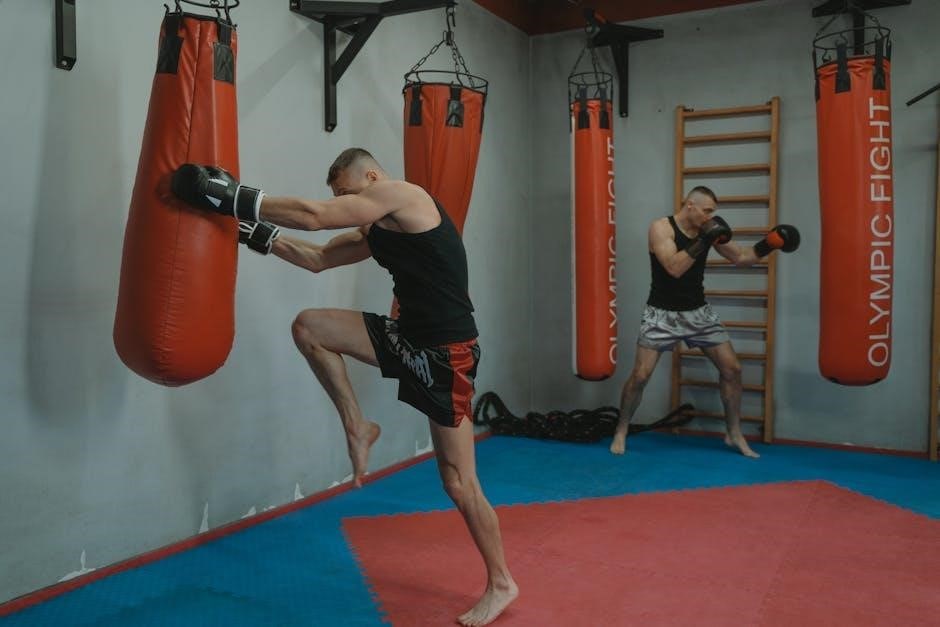
Heavy bag work, a cornerstone of Muay Thai training detailed in many PDF workout guides, builds power, endurance, and technique. Fighters repeatedly strike the bag with punches, kicks, knees, and elbows, simulating a real opponent. It’s excellent for developing striking combinations and refining technique without the risk of direct contact.
Effective heavy bag sessions, as outlined in training plans, focus on maintaining proper form, rotating the hips, and generating power from the ground up. Variations include round-by-round drills, specific combination work, and conditioning rounds to enhance stamina and overall fitness. It’s a fundamental element for all levels.

Strength and Conditioning for Muay Thai
Muay Thai PDF routines emphasize full-body strength – legs, core, and upper body – through targeted exercises.
This builds power, stability, and endurance crucial for effective striking and clinching.
Leg Strength Exercises
Muay Thai demands powerful legs for delivering devastating kicks and maintaining balance. PDF workout plans frequently incorporate squats – both bodyweight and weighted – to build overall leg strength and endurance. Lunges, including forward, reverse, and lateral variations, are also essential for developing explosive power and agility.
Calf raises target the crucial calf muscles for improved kicking technique and stability. Plyometric exercises, such as jump squats and box jumps, enhance explosive power, vital for quick and forceful strikes. Many routines also include specific drills to strengthen the hip flexors and glutes, contributing to overall leg power and preventing injuries. Consistent leg work is foundational for any effective Muay Thai training program.
Core Strengthening Exercises
A robust core is paramount in Muay Thai, providing stability for powerful strikes and absorbing impact. PDF workout guides emphasize exercises like planks – standard, side, and with variations – to build isometric strength. Russian twists, utilizing a medicine ball or weight plate, effectively target the obliques.
Leg raises and bicycle crunches engage the lower abdominal muscles, crucial for rotational power. Wood chops, performed with a cable machine or resistance band, mimic the twisting motion of punches and kicks. Consistent core work enhances power transfer, improves balance, and protects the spine during training and sparring.
Upper Body Strength Exercises
Muay Thai demands upper body strength for delivering powerful punches, clinching, and defending. PDF workout routines commonly include push-ups – standard, diamond, and incline – to build chest, shoulder, and tricep strength. Pull-ups or lat pulldowns develop back and bicep muscles, essential for pulling and grappling during the clinch.
Dumbbell rows and bench presses further enhance upper body power. Shoulder presses and lateral raises improve shoulder stability and striking range. Incorporating resistance band exercises provides dynamic resistance, mimicking the speed and explosiveness of strikes. Consistent upper body training boosts punching power and endurance.

Muay Thai Workout Routine ー Beginner Level
Beginner PDF routines focus on foundational techniques, building stamina through cardio, and establishing proper form – typically three days weekly for optimal progress.
Beginner Workout Schedule (3 days/week)
A typical beginner schedule, often found in Muay Thai workout PDFs, involves three non-consecutive days of training. Day one might focus on technique – shadow boxing (3 rounds of 3 minutes), basic punches and kicks with a partner (4 rounds), and core work. Day two could be cardio-centric: jump rope (10 minutes), light jogging (20 minutes), and bodyweight exercises.
Day three emphasizes bag work (5 rounds) to practice combinations and build endurance. Each session should begin with a dynamic warm-up and conclude with static stretching. Remember to prioritize proper form over speed or power initially, gradually increasing intensity as fitness improves. PDF guides often provide detailed round timings and exercise variations.
Focus on Fundamental Techniques
Muay Thai workout PDFs for beginners consistently emphasize mastering foundational techniques. This includes the correct stance, basic punches (jab, cross), kicks (roundhouse, teep), knees, and elbows. Drills often involve repetitive practice of these movements to build muscle memory and refine form.
Proper technique is paramount to prevent injuries and maximize effectiveness. Many PDF resources break down each technique step-by-step, with visual aids. Focus on generating power from the hips and maintaining balance. Prioritize accuracy and control before increasing speed or force, building a solid base for more advanced skills.
Cardio and Endurance Building
Muay Thai workout PDFs frequently incorporate cardio to mimic the demands of a full fight. Expect routines with interval training – short bursts of high-intensity activity followed by brief recovery periods. Skipping rope is a staple, enhancing footwork and coordination. Shadow boxing, performed at varying speeds, builds stamina and technique simultaneously.
Many PDF guides suggest running, swimming, or cycling as supplementary cardio. Building endurance is crucial; Muay Thai engages nearly every muscle group, requiring sustained effort. Consistent cardio work improves cardiovascular health and allows fighters to maintain intensity throughout multiple rounds.

Muay Thai Workout Routine ー Intermediate Level
PDF guides for this level increase intensity and volume, adding clinch work and complex drills. Expect 4-5 weekly sessions focusing on technique refinement and stamina.
Intermediate Workout Schedule (4-5 days/week)
Monday: Technique Focus (90 minutes) – Shadow boxing (3 rounds), pad work (5 rounds emphasizing combinations), and technical sparring (3 rounds). Tuesday: Strength & Conditioning – Leg day focusing on squats, lunges, and calf raises, plus core work. Wednesday: Cardio & Clinch – Roadwork (30-45 minutes) followed by clinch drills (30 minutes). Thursday: Bag Work & Technique – Heavy bag training (5 rounds) interspersed with technique drills. Friday (Optional): Sparring or Active Recovery – Light sparring (3-5 rounds) or foam rolling/stretching. Many PDF workout plans detail these sessions, offering structured routines for progressive overload and skill development. Remember to consult a PDF guide for proper form and modifications.
Incorporating Clinch Work
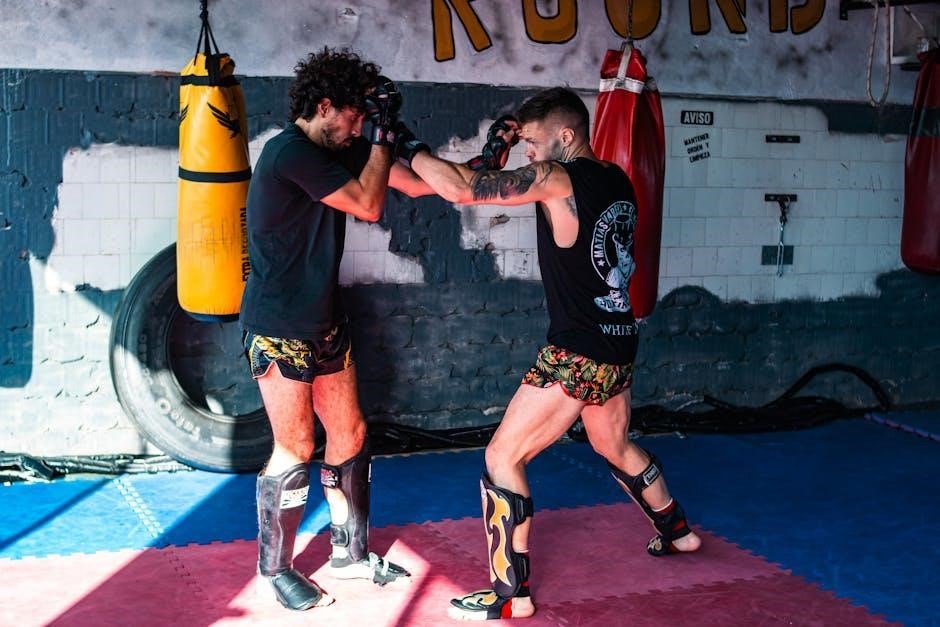
Clinch work is integral to Muay Thai, demanding strength, balance, and technique. Intermediate routines should dedicate specific sessions to clinch drills – neck wrestling, knee strikes, and sweeps. Begin with static clinch practice, focusing on control and posture. Progress to dynamic drills, incorporating movement and strikes. PDF workout guides often detail clinch sequences and partner drills. Remember safety: use proper technique and protective gear. Clinch training builds core stability, enhances grappling skills, and adds a crucial dimension to your striking arsenal. Explore PDF resources for detailed instruction.
Increasing Intensity and Volume
Intermediate Muay Thai routines necessitate a progressive overload – boosting intensity and volume. This means shorter rest periods, more rounds, and heavier bag work. PDF workout plans should outline this progression. Gradually increase sparring frequency, focusing on controlled application of techniques. Incorporate interval training for cardio, alternating high-intensity bursts with recovery periods. Strength and conditioning should also intensify, with heavier weights and more challenging exercises. Consult PDF guides for sample schedules. Remember proper form is crucial to prevent injury as intensity rises.
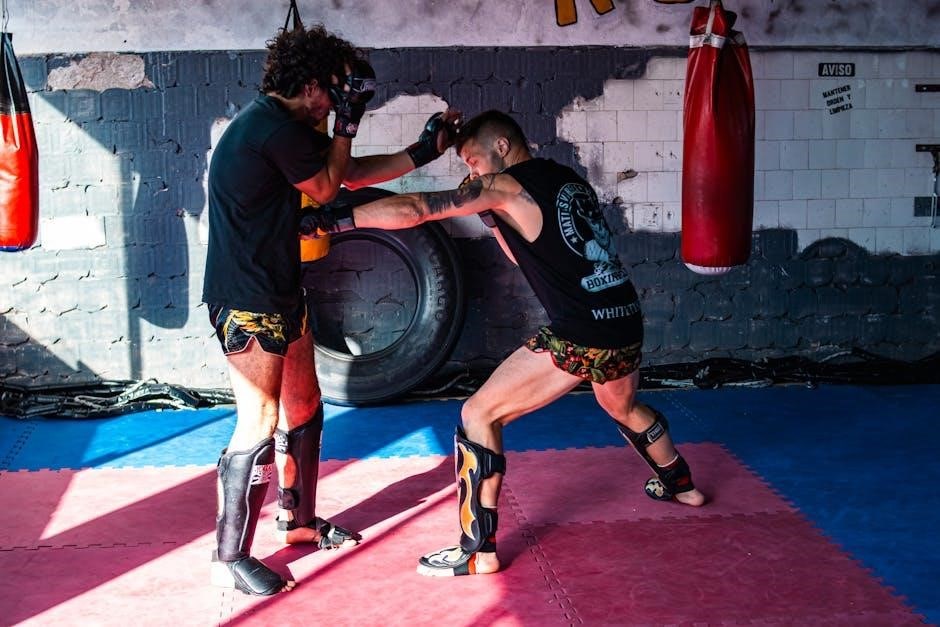
Muay Thai Workout Routine ⏤ Advanced Level
Advanced fighters utilize PDF plans emphasizing sparring, fight simulation, and peak conditioning. Intense training schedules (5-6 days/week) build stamina and refine technique for competition.
Advanced Workout Schedule (5-6 days/week)
Advanced Muay Thai training, often detailed in comprehensive PDF workout guides, demands a rigorous 5-6 day per week commitment. A typical schedule might include two high-intensity sparring sessions, focusing on applying techniques under pressure. Three days are dedicated to technique refinement – pad work, heavy bag drills, and shadow boxing – increasing volume and complexity.
Strength and conditioning are crucial, incorporating leg strength, core stability, and upper body power. Recovery is paramount; active recovery days with light cardio and stretching are essential to prevent injury and optimize performance. Many PDF resources provide detailed breakdowns of each session, ensuring a balanced and progressive approach to training.
Sparring and Fight Simulation
Sparring forms the cornerstone of advanced Muay Thai preparation, often outlined in detailed PDF training plans. These sessions aren’t just about fighting; they’re about tactical application, timing, and reading opponents. Fight simulation drills replicate the intensity and structure of a match – rounds, breaks, and corner coaching.
Progressive sparring, starting with light contact and gradually increasing intensity, builds confidence and resilience. PDF guides emphasize controlled aggression and defensive awareness. Analyzing sparring footage is vital for identifying weaknesses and refining strategy, preparing athletes for the demands of competition.
Peak Performance Conditioning
Peak Performance Conditioning, detailed in advanced Muay Thai workout routine PDFs, focuses on maximizing an athlete’s physical capabilities. This phase integrates high-intensity interval training (HIIT) to enhance cardiovascular endurance and explosive power. Strength and conditioning routines target muscle groups crucial for striking and clinching, building both power and stamina.
PDF guides often include specific drills to improve reaction time, agility, and anaerobic capacity. Nutrition plays a pivotal role, emphasizing optimal fuel intake for training and recovery. This holistic approach ensures fighters reach their physical prime before competition.

Cool-down and Recovery
Muay Thai workout routine PDFs emphasize post-training recovery: static stretching, foam rolling, and proper nutrition are vital for muscle repair and preventing injury.
Static Stretching
Muay Thai workout routine PDFs consistently highlight static stretching as a crucial cool-down component. Holding each stretch for 20-30 seconds post-workout improves flexibility and reduces muscle soreness. Focus on major muscle groups utilized during training – hamstrings, quads, groin, calves, shoulders, and back.
Examples include hamstring stretches, quad stretches, and shoulder cross-body stretches. Proper form is essential to avoid injury; stretches should be felt, not painful. Integrating static stretching into your routine aids recovery, enhances range of motion, and prepares your body for future training sessions, ultimately contributing to long-term progress.
Foam Rolling
Many Muay Thai workout routine PDFs advocate foam rolling as a self-myofascial release technique. Applying pressure to tight muscle areas with a foam roller helps break up adhesions and improve blood flow, accelerating recovery. Target areas include calves, hamstrings, quads, glutes, and back – muscles heavily engaged in striking and clinching.
Spend 30-60 seconds on each muscle group, slowly rolling back and forth. While potentially uncomfortable, it shouldn’t be intensely painful. Foam rolling complements static stretching, enhancing flexibility and reducing muscle soreness, ultimately optimizing performance and preventing injuries in your Muay Thai journey.
Nutrition for Muay Thai Athletes
Comprehensive Muay Thai workout routine PDFs often dedicate sections to nutrition, recognizing its pivotal role in performance and recovery. A diet rich in lean proteins – chicken, fish, beans – supports muscle repair. Complex carbohydrates – brown rice, sweet potatoes – provide sustained energy for intense training sessions.
Hydration is crucial; drink water consistently throughout the day. Healthy fats, found in avocados and nuts, are essential for hormone production. Avoid processed foods and excessive sugar. Prioritizing nutrient timing – consuming protein post-workout – maximizes recovery and adaptation.
Sample 8-Week Muay Thai Training Plan
PDF guides frequently present structured plans, like an eight-week program, progressively building intensity. These plans integrate technique, strength, and conditioning for optimal results.
Phase 1: Building a Foundation (Weeks 1-2)
PDF workout routines often begin with a foundational phase, typically spanning the first two weeks. This initial stage prioritizes establishing correct technique and building a base level of cardiovascular endurance. Expect a focus on fundamental drills – shadow boxing, basic punches, kicks, and knee strikes – performed with meticulous attention to form. Strength training during this phase emphasizes core stability and leg strength, preparing the body for more intense work.
Cardio sessions are generally low to moderate intensity, aiming to improve stamina without causing excessive fatigue. The goal isn’t power, but rather consistency and proper movement patterns, setting the stage for progressive overload in subsequent phases.
Phase 2: Increasing Intensity (Weeks 3-4)
PDF Muay Thai training plans typically escalate intensity during weeks three and four. This phase builds upon the foundation established previously, introducing more complex combinations and increasing the volume of training. Pad work and heavy bag sessions become more demanding, incorporating faster striking and varied angles. Strength and conditioning routines intensify, adding resistance and focusing on explosive power development.
Expect to see the introduction of clinching drills, a hallmark of Muay Thai, alongside increased cardio intervals. The aim is to push physical limits safely, fostering adaptation and preparing the athlete for peak conditioning.
Phase 3: Peak Conditioning (Weeks 5-6)
PDF Muay Thai training plans designate weeks five and six for achieving peak physical condition. This phase emphasizes sparring, simulating fight scenarios to refine technique under pressure. Workouts become highly specific, mirroring the demands of a full fight – rounds, rest periods, and strategic pacing. Strength and conditioning focus on maintaining power while enhancing endurance.
Expect increased training volume and intensity, demanding optimal nutrition and recovery. The goal is to reach peak performance, preparing the athlete for competition or advanced training phases.
Phase 4: Tapering and Preparation (Weeks 7-8)
PDF Muay Thai training schedules detail weeks seven and eight as a crucial tapering phase. This involves strategically reducing training volume to allow the body to fully recover and supercompensate. Intensity remains high, but duration decreases, focusing on sharpening technique and maintaining fight readiness.
Mental preparation becomes paramount, visualizing success and refining fight strategy. Nutrition shifts towards optimal glycogen storage and hydration. This phase ensures peak performance on fight day, avoiding overtraining and maximizing energy reserves.
Resources for Muay Thai Workouts (PDFs & Online)
Numerous PDF guides and online platforms offer structured Muay Thai workout routines. Dragon Gym provides a 21-page, 287KB document outlining combined Muay Thai and strength training plans. Other resources detail weekly schedules, specifying exercises for each day, catering to all levels.
Websites host technique tutorials, conditioning drills, and nutritional advice. Searching “Muay Thai workout routine PDF” yields a wealth of downloadable plans, from foundational builds to peak performance conditioning. Explore these resources to tailor a program to your fitness goals!